Sir Isaac Newton - mathematical laws Black Box theory
 Homepage
. William Gilbert . Rene Descartes . Albert Einstein ......
Newton's Principia .
Against Descartes ......
General Image Theory
Homepage
. William Gilbert . Rene Descartes . Albert Einstein ......
Newton's Principia .
Against Descartes ......
General Image Theory 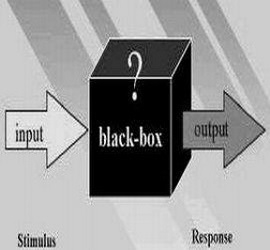
Isaac Newton (25.12.1642-20.3.1727 or 4.1.1643-31.3.1727) was a great mathematician and a great physicist, and he was probably the most incisive thinker ever known. He chiefly established that natural phenomena generally follow determinate mathematical laws in demonstrating consistent laws of motion, of gravity and of other phenomena. When young he backed Cartesian physics but ended backing Gilbert's action-at-distance attraction physics, however under very strong peer pressure Newton produced his non-committal 'black box' theory of science as allowing only proving how things happen but not necessarily allowing proving or disproving alternative theories of why things happen and seemingly allowing as possible options both Cartesian random push-physics and Gilbertian signal-emission physics. But having published disproof of the Descartes option, it must logically be taken that he wanted his physics seen as a signal-response Gilbertian physics though afraid to spell it out clearly. Newton may have seen his blackbox physics as only a more rigorous logical requirement of experimental science, from William Gilbert's earlier requirement that science could not go beyond what can be deduced directly from experience and experiment. Though it was supported by a few other physicists, and by George Berkeley in his 1721 'De Motu', Newton's black-box physics has been very wrongly either just ignored or 're-interpreted' by many including Einstein and widely taught as being a Cartesian 'dead-matter plus ether or forcefield' push why-physics. Newton's main works were his Latin 1687 Philosophiae Naturalis Principia Mathematica (or 'Mathematical Principles of Natural Philosophy'), and The Opticks published in English in 1704 and in Latin in 1706. So to really study some great physics can still really need Latin.
Newton's science theory.
Though the early Newton had favoured Descartes-style
mechanical push physics theory, his later major published theory work involved
combining laws of force and motion in mechanics with a Gilbertian
action-at-distance signal-response attraction theory, to develop laws of gravitational orbital motion
around attracting 'centres of force'. This change of view may have been chiefly come from Robert Hooke around 1679, and before Newton's 'Principia', suggesting that planet orbitings might be
due to an attraction force decreasing with distance compounded with inertial forces of planets momentum, though seemingly without any mention of the originator of such attraction physics and of planet inertia in space as Gilbert (though not their combination for orbits) and giving only
limited support for attraction physics, and Newton had apparently considered attraction physics theory and inertia somewhat earlier in any case.
Newton's library suggests that he seemingly at some point had studied Hooke's 1674 'An attempt to prove the motion of the Earth' which said the same, though Newton may not have studied Gilbert directly nor indeed Kepler's astronomy directly.
(Hooke discovered his law of elasticity in 1676, but first published it only as the anagram: “ceiiinosssttuv.” which he revealed two years later as the Latin 'ut tensio, sic vis' meaning “as the extension, so the force.”.)
By 1684 in a small manuscript he privately-distributed 'De Motu Corporum in Gyrum' (On the Motion of Bodies in an Orbit) Newton confirmed that the maths of planet motion did fit attraction physics and inertia though without significantly acknowledging Hooke or indeed Gilbert, and in his later published 'Principia' he saw gravity as governing the
motions of the celestial bodies as well as of apples falling from
trees. Actually the general idea that planetary bodies might be attracted by the Sun or other planetary bodies was somewhat widespread in the 1600's certainly in England, and there had chiefly come from William Gilbert though few acknowledged that fact.
Gilbert, as some others, also put the idea of momuntum inertia but did not specifically consider combination of that with planetary attraction as later Hooke and Newton did but effectively they had built on Gilbert though maybe not directly.
Newton saw motions combining attraction forces and bodies momentum (mv) not kinetic energy (mv²) as some like Leibnitz wrongly supposed though that is involved in collision force motion change. But when he published, Newton publicly supported a 'blackbox physics'
or 'theoryless physics', and his main work used both the 'force' terminology perhaps more readily
associated with Galileo-Descartes mechanics AND the 'attraction'
terminology associated often with William Gilbert action-at-distance attraction
theory, and allowed that gravity might be due to signals
acting across empty space to which bodies respond in line with Gilbert's physics OR might be
caused by the impact force of unseen ether particles or fluid in line
with Descartes' physics. But privately Newton certainly seems to have judged the evidence to favour Gilbertian action-at-distance signal physics
and many of Newton's physics contemporaries believed that Newton like some other physicists did privately back Gilbert but were bullied into hiding that,
so Newtonian physics cannot be really understood unless you have first studied William Gilbert's 'De Magnete' or 'On The Magnet'.
Newton by his unpublished 'De Aere et Aethere' seems to have privately favoured action-at-distance physics from around 1676 to 1679 long before publishing his Principea in 1687. His clearest published half-support for it was in the 'Queries' to his later-published English 'Opticks' and Latin 'Optice' 1704-1717.
So in Query 31 "Have not the small Particles of Bodies certain Powers, Virtues, or Forces, by which they act at a distance, not only upon the Rays of Light for reflecting, refracting, and inflecting them, but also upon one another for producing a great Part of the Phaenomena of Nature? For it’s well known, that Bodies act upon one another by the Attractions of Gravity, Magnetism, and Electricity..."
Robert Hooke's 1674 'An attempt to prove the motion of the Earth' stated,
"I shall explain a System of the World [or an astronomy] differing in many particulars from any yet known, answering in all things to the common Rules of Mechanical Motions: This depends upon three Suppositions.
First, That all Coelestial Bodies whatsoever, have an attraction or gravitating power towards their own Centers, whereby they attract not only their own parts, and keep them from flying from them, as we may observe the Earth to do, but that they do also attract all the other Coelestial Bodies that are within the sphere of their activity; and consequently that not only the Sun and Moon have an influence upon the body and motion of the Earth, and the Earth upon them, but that ☿ also ♀, ♂, ♄, and ♃ by their attractive powers, have a considerable influence upon its motion as in the same manner the corresponding attractive power of the Earth hath a considerable influence upon every one of their motions also.
The second supposition is this, That all bodies whatsoever that are put into a direct and simple motion, will so continue to move forward in a straight line, till they are by some other effectual powers deflected and bent into a Motion, describing a Circle, Ellipsis, or some other more compounded Curve Line.
The third supposition is, That these attractive powers are so much the more powerful in operating, by how much the nearer the body wrought upon is to their own Centers.
Now what these several degrees are I have not yet experimentally verified; but it is a notion, which if fully prosecuted as it ought to be, will mightily assist the Astronomer to reduce all the Coelestial Motions to a certain rule, which I doubt will never be done true without it."
Hooke here talked 'supposition' while Gilbert earlier gave much of this as from experiment or other fact and Newton gave a maths to precisely fit many facts.
And of course we do not know to what extent Hooke developed these ideas himself or maybe more likely got them from Gilbert and/or Newton or others. Certainly most of this could be found in or got from Gilbert's 'De Magnete' which Hooke had studied closely if Newton perhaps had not and which did play-down and scatter such theory ideas.
But if Newton did know Gilbert then he may well have seen Hooke as wrongly presenting Gilbert's physics as his own and so wrong to credit Hooke too much ?
Yet unlike Newton, Hooke did not seem to present a clear understanding of Gilbert's attraction physics as being a signal-response physics and being unsure of your full understanding of a source might seem a valid reason for not quoting that source ?
Real science undoubtedly has to rest on relevant experiment, observation and mathematics, none of which Hooke himself had done on this. But Hooke wrongly insisted that his claimed supposition was the science and there is no doubt that Hooke at least helped motivate Newton, if perhaps chiefly by greatly annoying him.
Newton seems to have seen Hooke, like Des Cartes, as over-inclined to 'mere theorising and hypotheses' which he certainly at times attacked as unscientific.
The improved 1713 second edition of Principia like later editions included an entirely Gilbert-like Preface by Roger Cotes strongly supporting Newton's experimental physics as having disproved (Catholic) Cartesian supposition physics - and Newton added his own support for this position at the end of that second edition of Principia. Coates here also saw too many physicists of the time as 'too much prepossessed with certain prejudices', and strongly argues for Newtonian attraction physics against Cartesian push-physics but himself unlike Newton referring only to gravity and notably making no mention of magnetism.
( see Principia 2nd Edn )
Cotes noted that “by taking the foundation of their speculations from hypotheses”, Cartesian physicists “merely put together a romance, elegant perhaps and charming, but nevertheless a romance”. But strong Newton supporter Cotes who was associated with producing the second definitive edition of Newton's 'Principia' died a very young 33 with Newton complimenting "If he had lived, we might have known something".
Of course Cotes' and Newton's attacks on 'mere theorising' were similar to Gilbert's as backing limiting theorising and not as entirely ruling out theorising since both Newton and Gilbert actually did some significant theorising.
Newton, like William Gilbert before him, attacked 'mere theorising' as not science - and they both backed 'experiment + consistent theory or maths' as the only real science - so that the sub-title of Gilbert's 1600 "De Magnete" was basically "A new science, with many both argument and experiment proofs".
As a student at Cambridge, Newton's Trinity College taught Aristotle as well as seemingly some Galileo and early Descartes and astronomy by Johannes Kepler and Thomas Streete but not William Gilbert physics, and the physics study of Cotes seems to have been similarly limited.
But in Newton's lifetime Protestant europe accepted Catholic physics as well as accepting the Catholic calender that changed Newton's birthday from Christmas Day 25.12.1642 to 4.1.1643 and rather more ordinary.
The success of the earlier false attacks on William Gilbert's action-at-distance physics, by Jesuits and supporters of the catholic Galileo and Descartes, greatly aided the later false attacks on Isaac Newton's related physics
and helped force Newton to first compromise his physics and to then quit the physics battle.
In Principia Book 1 Section 11(or X1) final Scholium, after
showing that planet orbits can be explained by some centripetal
force directed towards the sun, Newton concludes that the existence
of gravity as a property of bodies can be deduced from the proven
existence of magnetism as a property of bodies ;
"These propositions naturally lead us to the analogy there is
between centripetal forces, and the central bodies to which those
forces used to be directed ; for it is reasonable to suppose that
forces that are directed to bodies should depend on the nature and
quantity of those bodies, as we see they do in magnetical
experiments."
Magnetic force is proven to come from magnets and not from any surrounding ether or continuum as Descartes (and later also Einstein) wrongly supposed.
(Einstein tried and failed to add an electromagnetic continuum to his gravity spacetime continuum.)
Yet also in this scholium Newton states that he is not committing to
any particular manner of operation of 'at-a-distance' forces or of
'contact' forces.
"I here use the word attraction in general for any endeavour, of
what kind soever, made by bodies to approach each other ; whether
(as Gilbert) that endeavour arise from the action of the bodies
themselves as tending mutually to or agitating each other by
spirits emitted ; or whether (as Descartes etc) it arises from the
action of the aether or of the air or of any medium whatsoever
whether corporeal or incorporeal any how impelling bodies placed
therin towards each other. In the same sense I use the word
impulse, not defining in this treatise the species or physical
qualities of forces but investigating the quantities and
mathematical proportions of them"
Clearly to Newton bodies moved, but experiment could not definitely decide if
they were actually being pushed by others or moving themselves
- there is no evidence to decide between dead matter and active
matter or between 'A moves B', and 'B moves itself in response to
A'. But in fact Newton did get actual attraction physics to fit the evidence
and could not get the then current Descartes push-physics to fit the evidence.
A better science translation of Newton's Latin 'spiritus emmisos' here maybe would not be 'spirits emitted' but
'incorporeal emissions', 'energy emissions', 'incorporeal agitating
emissions' or 'energy signal emissions'? So basically Newton's 'spirits emitted' signals were one of William Gilbert's various 'effluvia' signals
for magnetic, electric and gravity forces giving his action-at-distance remote-control physics which Newton basically backed. In his only other publication 'Opticks', which he published
both in English and in Latin, he used the phrases 'magnetick effluvia' and 'effluvia magnetica' and only used 'spirits' for 'flammable fluids'.
But in the General Scholium ending his Principia
he does indicate a maybe less
scientific view on 'spirits' within bodies reacting to such emissions?)
And seeing gravitation as the defining property of matter, maybe matter really seemed to Isaac Newton (as to William Gilbert) to
be 'that which responds to attraction signals' and so really being maybe a kind of mind - very different to the widely-taught textbook 'Newton physics' ?
And whereas Gilbert gave his main 1600 work a clearly misleading 'just Magnetism' title though it really gave a much wider physics, Newton gave his main 1687 work dealing seemingly mostly with Gravity what some saw as an oppositely misleading 'not just Gravity physics' title ?
Of course Newton's conclusion that his evidence strongly supported attraction physics or blackbox physics against mainstream Cartesian Atomist random-push-physics was (stupidly) not accepted by most physicists (who Newton
noted in Principia's introduction to Book 3, had "prejudices to
which they had been many years accustomed"), and it was maybe too
difficult for Einstein or anyone else to address. But Newton saw
his published laws of physics as correctly predicting natural events without
needing to know why things happened, in the manner of 'black box'
behaviour laws that relate only inputs or stimuli to outputs or
responses without considering any mechanisms connecting them.
Newton's blackbox physics considered hypotheses regarding currently unseens as being
matters of philosophy or logic and not science, and not currently provable or
disprovable by science. Newton publicly concluded that though he had disproved
substantial elements of Galileo-Descartes mechanical physics, like
ether vortex motion gravity and motion tides, he allowed that some future modification of
a mechanical ether theory might correctly explain gravity,
magnetism, electricity and light. But Newton himself really seemingly
preferred to use Gilbert-style attraction theory in thinking about
physics, which he also seemingly thought might more likely correctly explain
gravity and some or all other forces. Proving any contact-push physics theory also clearly requires being able to definitely distinguish a zero distance from an infinitely-near-zero distance needing perfect observation or measurement which can never actually be possible.
And while requiring physics and science knowledge to have limits, Newton's black-box physics failed to specify what those limits actually are or actually should be - and not all were keen on science knowledge havig limits that were themselves unknowns.
The Catholic Church opposed Newton's physics
more than Descartes' physics partly for him being Protestant and partly for its more strongly supporting a moving Earth.
A few strong supporters of Newton's physics much overestimated its impact, as did Bernard de Fontenelle in his 1728 'The Elogium of Sir Isaac Newton' claiming
"Thus attraction and vacuum banished from physics by Descartes, and in all appearance for ever, are now brought back again by Sir Isaac Newton, armed with a power entirely new, of which they were thought incapable, and only perhaps a little disguised."
(see Newton contemporaries)
Newton's considerations on Descartes push-physics as against
Gilbert response attraction physics is maybe best put in his Principia Book 3
Rule 3. Here he first shows how we can reason that matter has
solidity and exclusive-space-occupancy, then how "we must
universally allow that all bodies whatsoever are endowed with a
principle of mutual gravitation." Then he concludes that the
argument is stronger for the universal gravitation of all bodies
than for their impenetrability. But in finding that Gilbert-like
physics was somewhat more likely the true option, Newton concluded
that the evidence did not exist to decide between the two theories
and might well never exist, continuing with "In bodies we see only
their figures and colours, we hear only the sounds, we touch only
their outward surfaces, we smell only the smells, and taste the
savours : but their inward substances are not to be known either by
our senses or by any reflex act of our minds" - Newton could see no
evidence for Descartes 'certain knowledge'. He basically concluded
that the evidence did not exist to decide between taking 'mass' as
the measure of the size and pushability of bodies or as the measure
of bodies' ability to produce and respond to gravity signals - though
he seems clearly to have privately favoured the latter.
That magnetic force emission or 'magnetick effluvia' readily penetrate solids, even dense gold, Newton saw as evidence
of solids not being fully solid or fully pushable but as containing much empty space - see Opticks Book2 Part3 PropV111.
(but Gilbert had taken it as evidence that magnetic effluvia are probable incorporeal or non-pushing,
otherwise if gold was 90% space then magnets should push gold 10% unlike two gold balls colliding with 100% push but
small pushes might be hard to detect for experiments on magnets pushing gold.
But of some interest
Newton's scholium words above do also allow that INCORPOREAL bodies or media might
either excite responses from matter or might somehow push matter though
lacking any push property in a Cartesian physics sense.
Newton's Principia claimed to explain how any kind of motion related to any kind of force, and specifically that any acceleration required some force acting,
but interestingly somehow excluded the motion that Gilbert had concluded was impossible to explain with any simple push physics
and could only be explained by his 'magnetical' or 'attraction' signal-response physics. This is the 'compass motion' turning or magnetic-pointing orientation motion,
additional to magnetic attraction and repulsion, and Principia omits it possibly only because Newton may have felt that it might require him to publicly accept push-physics as being disproved when he did not want to publicly do that
because the great majority of his physicist peers were wrongly prejudiced in favour of that.
His Principia second edition Book 3 Corollary 5 notes "the power of a magnet falls with distance not as its square but almost as its triplicate", as Kepler also noted.
It seems that the experiments this was based on concerned the ability of a magnet to turn a compass and not to attract iron but implying that both would follow the same distance law, but non-Gilbert magnetic experiment often could not be replicated.
Gilbert's 1600-published compass-motion experiments are detections of force not involving acceleration, but to make them measure forces would seem to need measuring turn-speeds or accelerations.
Yet maybe measures only of the detection distances could be measures of magnetic forces, somewhat like star brightness as a measure of star distance though like all measuring methods this would have accuracy limits.
Like others then Newton in fact achieved little on magnetism or electricity, which had some tricky behaviours, and later physicists could not get electromagnetism to fit Cartesian physics theory but did not even try to get it to fit the wrongly-supposed-disproved action-at-distance physics theory so that it
began its drifting into indefinite physics theory. Still some Descartes supporters certainly managed to convince themselves that Newton supported Descartes despite his published works not at all backing that. And some Cartesians like Leibnitz, in a later version of his Tentamen, even convinced themselves
that Gilbert also had supported Descartes physics despite him very strongly disputing push-physics and creating his own action-at-distance physics.
But Leibnitz as a response to Newton's 'Principia' in his 1689 “Essay on the causes of celestial motions” also wrongly backed Descartes' vortex theory of planet motion claimed wrongly to disprove Newton's universal gravitation.
The infamous Newton-Leibnitz calculus dispute had well predated Newton's physics of 1687, but Leibnitz foolishly overall favoured Cartesian physics over the Newtonian physics that had disproved it (though he did dispute much of Descartes other philosophy and science ideas).
While many physicists have seen explaining 'at-a-distance forces' like magnetism and gravity as more problematic than explaining 'contact forces' like
collision, Gilbert and Newton saw explaining both types of forces as being equally problematic. Unlike Descartes they saw trusting logical deduction or human senses to always give direct 'certain knowledge' as being unscientific - to them 'contact' could be 'small-separation' and everything really needs rigorous experimental
proof, even if at that time or any time such is not possible. And mostly experimental science should be proving what is certainly more probably true, rather than what is certainly true. Proofs of substantial distances may often be more reliable than proofs of zero distances which commonly require the unproven assumption
that what is not visibly large must be zero, doubtful even before microscopes.
There is no good scientific proof of the actual existence of any kind of 'contact push force' though such forces may seem to exist.
And a majority of scientists insisting on push-physics when the facts demonstrated by Gilbert and Newton made it very doubtful was 'science prejudice' prevailing against Gilbert-Newton science sense - as it was chiefly still doing so in 2015 with Brian Cox talking nonsense about Newton on TV in England as supposed science.
Today the much-used Wikipedia and Discovery Channel seem to some to often really involve the replacement of actual knowledge with popular prejudices to which many have been long accustomed ?
Newton was a professional mathematician and really an amateur physicist. While acclaimed chiefly for his physics and his mathematics, he spent much time doing experiments in materials chemistry and in optics and magnetism as well as in studying chemistry/alchemy and religion,
though he published mostly physics only and he, unlike many of his time including Kepler, showed no interest in Astrology.
Always a majority of scientists have set their studies to fit the prevailing views of the majority of scientists of the time but Newton strongly rejected that at least privately. And in that he agreed with the earlier great English scientist William Gilbert.
Newton may have seen Astrology as chiefly concerning irrational people behaviour and so not amenable to rational study.
And he may have been one of those few people who basically believe nothing, and it drives them to study many things to themselves find if they might actually contain any bits of truth or none ?
But, like William Gilbert, he funded his science experiments himself from his mathematician salery - helped, also like Gilbert, by not having a wife or children to support when Cambridge University did not allow students or staff to marry. The also unmarried Nikola Tesla also struggled to fund his science experiments.
Newton's first published science was basically his groundbreaking light experiments which could have been well built-on by others but instead were wrongly misunderstood and attacked as 'not splitting light' and like nonsense by a majority of physicists for many years, as Gilbert's earlier magnetism experiments were, by Catholic Jesuits and
a range of European scientists with one of Newton's fellow English scientists Robert Hooke
working often viciously to undermine Newton as the earlier English self-promoter Francis Bacon had undermined William Gilbert.
And yes Newton did consider some doubtful hypotheses regarding light that merited challenge, unlike his unmatched experiments.
But a majority of scientists then were clearly idiots keen to support wrong science and opposing good science, as still continues especially in physics where, maybe like in todays US Republican Party, the worst ideas can wrongly prevail.
Newton's light-splitting experiment :

But it seems that in his study of physics Newton cut corners bigtime and/or hid some of his physics studies, maybe thinking he might get more from experiment than from study, though that is not the biggest problem of the time for physics history.
Newton was certainly very annoyed that his early groundbreaking experiments on light were misunderstood and misrepresented by many of his peers but did not let that stop him doing further experiments but did put him off further publishing for a long time. He also did useful work on sound, and produced a
theory of fluids that solved problems of fluids in movement and of
motion through fluids. This he applied to Descartes' supposed
unseen universal fluid ether, in which many physicists came to
believe, but Newton disproved substantial aspects of that and he never
conceded any kind of mediating ethers nor indeed signals as proven entities
though granting that action-at-a-distance needed some kind of
mediation. He did in his 'Opticks' and elsewhere use both ether push explanation and attraction signal explanation to help clarify his new
physics ideas, especially for physicists who supported either one
of such explanations and their 'unseens'. Many at the time saw
Newton as developing Gilbert's theory which
supporters of Descartes' Cartesian push-physics had made very unpopular by name-calling only, but one of
Newton's great originalities was in his seeing particular explanations
as unnecessary to science and seeing hypotheses on unseens
as being unscientific - and being the first clear proponent of a
blackbox science simply predicting everything even if Newton himself did not really support it. Copernicus, Galileo
and others had earlier done some black-box science, but excluded
explanation only either as being more politic or as to be perhaps
done later. The substantial unpublished writings that Newton left after his death showed that Newton had major concerns about which he was unwilling to publish anything in his lifetime, like his major concern with Chemistry, seemingly being fearful of peer and employer pressure prejudice while alive. Having given up with physics long before his death, he made no arrangements about publishing such after his death and did not bother to leave any will.
Newton seems to have ended life caring little what the world thought of him or of his physics, and perhaps seeing the world of a very biased 1600s physics as really basicly hopelessly corrupted.
After his death, Newton's library was basically dumped - and much was only chiefly accidentally rediscovered much later but with some lost forever.
Mathematics was also advanced by Newton's work on calculus, which
many of his peers falsely claimed was stolen from Leibnitz though there was real evidence of the opposite.
But the much bigger stealing from Newton was undoubtedly Cartesian physicists falsely claiming that his Principia physics maths supported their Cartesian physics rather than attraction physics or blackbox physics.
In time most physics textbooks were teaching a Cartesian Newtonian physics wrongly as being Newton's physics as the fake-Newton still taught now. While Newton's
science was presentationally mathematical and distinctly in the style of
Euclid, Newton always required that experimental facts must
be decisive in science and not mere logical deduction or mathematics alone.
Much of Newton's time was devoted to experiments, and of course Newton's published physics mathematics was, like Gilbert's and most early mathematics,
presented geometrically rather than algebraically. And while his main work Principia concentrated chiefly on gravity,
it did present a complete physics of all physical forces and affects as a 'Theory Of Everything' like William Gilbert did while concentrating on magnetism.
So combining Gilbert and Newton may be like producing a Unified Field Theory 'TOE' which Einstein failed at.
Newton was the chief proponent of defined mathematical behaviour
laws with undefined-explanation 'black-box science', maybe chiefly
because he could see no way to certainly decide or prove between the alternative
Gilbert and Descartes physics explanations ('Newton's Dilemma') or
between equivalent alternative explanations of light. If different theories could fit
the same mathematics then maybe they were either really the same theory or
were compatible image theories and descriptions that only appeared
different. Newton did convince a few other scientists of his time into
favouring Black Box physics that could predict everything without relying
on explanations, as being the best physics possible as long as there were
no proven physics theories without unseens. (Of course the classic 'black-box' hid stuff from view and so prevents explanation, but perversely a 'black-box' has now become a thing
that records stuff for later viewing and so provides explanation and would be better called a 'white-box' ?)
But explanation-theory retained its popularity among scientists and was
even credited to Newton incorrectly by 'mainstream' Cartesians. Black-box theory was maybe fine
while nature was seen as being relatively simple, but it perhaps
looked less intelligible when later nature became seen as being more
complex - so it could then be argued that defined explanation is then
needed to help make a theory more understandable ? Or maybe some
correct science theory cannot be understandable to many anyway ? Of
course a science theory cannot be only a bare mathematics with no
physical meaning, but it can be a mathematics whose physical
meaning is not fully uniquely defined.
Newton did not well explain his two explanation-physics options, nor refer people to Descartes and Gilbert for such explanations,
but most of his peers believing him to support Gilbert's physics did not want Newton saying so. Newton undoubtedly knew how badly Gilbert's earlier attraction physics theory had been
treated, and correctly expected that a theory substantially based on it
would likely be equally badly received especially if it referred to Gilbert. Newton's peers mostly considered Newton's published physics as going to great lengths to hide its dependance on Gilbert's physics, and Newton may then have seen that as best for physics. Of course Newton giving little explanation allowed many to misunderstand or misrepresent Newton's physics as still holds even today.
It certainly appears that Newton knew of Gilbert's main experiments on magnetism,
and that he himself replicated some of those experiments. But despite his published physics strongly indicating otherwise, there is little evidence that he had any
substantial teaching of Gilbert or did any substantial study of Gilbert (from the library he left, it seems Newton used a weaker magnetism experiment early English textbook instead and since he generally went to lengths to study original sources for other subjects Newton was maybe warned as was Galileo that studying Gilbert was dangerous ?).
From what he published it is clear that Newton did magnetism experiments that he considered important and that he supported some physics that originated with William Gilbert, yet in the large range of his papers and books left when he died reference to these are somewhat strangely absent as though he saw Gilbert as more taboo than even alchemy. Unusually at
least two of Newton's acquaintances, including Robert Hooke, supported Gilbert's attraction physics theory to at
least some extent (if not very openly) rather than the more popular Cartesian push physics theory - but it is not clear to what extent they influenced eachother in that respect.
Hooke did put some attraction physics to Newton, but it is probable that if Newton had studied Gilbert properly then he could have developed his own physics further than he did ?
(Later still Nikola Tesla did make further progress with remote-control physics, though again seemingly without the potential added benefit of a study of its basic physics as published by William Gilbert.)
Newton's library shows that at some point he studied Mark Ridley's 1613 'A short treatise of magneticall bodies and motions' which basically steals much of the magnetism of Gilbert's De Magnete as his own though basically being a reasonable early English translation of that and making some small additions and briefly mentioning Gilbert's De Magnete. It uses some of Gilbert's peculiar terms like 'coition' but omits some aspects of Gilbert's effluvium signal-response physics and his static electricity studies and considerations on gravity, and gives a more God-produced astronomy based on a push magnetism as a North Magnetism joined with a South Magnetism.
Newton's library also shows that he studied Hooke's friend Robert Boyle's later 1673 'Essays of the strange subtilty, determine nature, great efficacy of effluviums' on magnetism, electricity and gravity being caused by the pushings of small-particle emission effluvia. Both are dubious physics as Newton no doubt came to realise.
(Though neither Hooke nor Newton publicly acknowledged Gilbert, maybe someone still has some evidence connecting them to Gilbert or Gilbertian ideas ?)
Newton's library and writings suggest strongly that his main interests were mathematics, religion and chemistry/alchemy - with optics as his chief concern for his relatively minor real interest in physics ?
His notes did include interest in experiments on 'changing gold into silver' (quite the opposite of actual alchemist aims) and on many other matters including a range of experiments on magnetism with no mention of Gilbert (see Newton Manuscript Note).
And he may not have named his 'physics giants' on whose shoulders he claimed to have stood because he had never actually studied the physics of any of them firsthand, his notes largely referring to contemporaries ?
Newton did try publishing one short paper on a part of his optics work
submitted in 1672 to the Royal Society. This first paper was a
small correct non-theory technical paper on colours, colour aberration
and Newton's new reflecting telescope - fully proving all that it
said (and was when he supported Galileo-Descartes atomism). But amazingly the eminent physicist peer Robert Hooke
immediately tried to stop the Royal Society publishing this first
paper of Newton, and himself published a ridiculous factually-wrong criticism of
it that was somehow widely backed. In reply to Newton rightly defending his paper in
1675 an angry Robert Hooke threatened to form his own
Royal Society, yet it was widely said that
Newton was unreasonable !
But the excellent light experiments of Newton done at age 23 were soon attacked by Robert Hooke, by Rene Descartes, and by English Jesuits in Liege and others (who generally had all failed to reproduce Newton's prism experiments which it was claimed he had unfortunately failed to sufficiently accurately explain). So science history blamed Newton.
Of course while Newton concluded that colour was a property of light itself and was not just a property of illuminated objects modifying light, which he claimed that he had 'proven definitely with a crucial experiment'. But unlike William Gilbert earlier, Newton failed to publish the exact details of his experiment and so did not help with correct replication by other scientists.
But opposition by Robert Hooke, Huygens and Jesuits like Pardies was really based on a less than scientific view that hypothesis was as valid as experiment and could not be disproved by experiment.
Newton at least at times also supported an anti-publication view many alchemists had favoured that some knowledge was 'not to be commu-
nicated without immense damage to the world' or keep to 'high silence'. But also later Newton allowed that light itself might respond to some signals from objects or their atoms as to gravitational signals.
Then in 1684 Gottfried Leibnitz (or Leibniz) seemingly after visiting Newton and seeing some of his maths began publishing some of Newton's key mathematics as his own, but by
1690 many were claiming that Newton had stolen the maths of Leibnitz.
Newton decided against publishing further papers, and though he
held a higher opinion of some earlier thinkers like Euclid, he was
very wary of putting his own ideas to most of his peers. With a few
minor mostly anonymous exceptions and private letters to a few
friends, Newton waited until he could publish his science himself
complete in book form - his Principia in 1687 and his Opticks in
1704. And when they were dismissed without real disproofs by largely
Descartes-supporter peers, Newton
resigned his Cambridge mathematics professorship to
finish with physics and found himself a new job as head of the British Mint. He basically stopped his physics experiments and theory work and devoted his energies to his new job instead to his death in 1727,
though he did continue to basically defend his physics through the Royal Society.
He maybe decided that physics had choosen to proceed by lying like politics and religion both of which he also had some involvement with for a time ?
And maybe also that he had been too open in publishing his physics relatively early ? In 1822 a French physicist claimed that Newton had gone mad in 1693, then making him incapable at physics and turning him to religion,
but this has never been widely accepted with the evidence generally supporting a more temporary milder episode only and probably caused by his mercury experiments then.
Newton was perceived by some as being a bit of a bully, but he was in fact clearly very afraid of his peers views of his work and so he hid or mispresented much of his work.
Hence in religion Newton was a pretend Church of England believer, though he held many written but unpublished religious beliefs that were significantly opposed to Church of England beliefs then.
He undoubtedly considered the two works that he published, Principia and Opticks, the most important of his work that he wanted published while alive, but being OK with other work being published after his death even though he did not prepare anything for such.
As with Gilbert earlier, Newton's attraction physics was rubbished without real disproof as being
anthropomorphic, including silly claims that it required all matter to
have eyes, minds and legs - ridiculous claims that themselves
involve anthropomorphic thinking. Gravity being simple can clearly
need only the simplest response, and the relative nature of
attraction theory really gave it more scientific power. And simple single-cell creatures like Amoeba
can show various responses to light and other things though having no brain, as can a TV to a remote. But
Newton's black-box theory allowing action-at-distance signal-response was soon simply ignored as though it did
not exist.
To quote 'A Short Account of the History of Mathematics' (4th
edition, 1908) by W. W. Rouse Ball, on Newton -
" His theory of colours and his deductions from his optical
experiments were at first attacked with considerable vehemence. The
correspondence which this entailed on Newton occupied nearly all
his leisure in the years 1672 to 1675, and proved extremely
distasteful to him. Writing on December 9, 1675, he says, `I was so
persecuted with discussions arising out of my theory of light, that
I blamed my own imprudence for parting with so substantial a
blessing as my quiet to run after a shadow.' Again, on November 18,
1676, he observes, `I see I have made myself a slave to philosophy;
but if I get rid of Mr.Linus's business, I will resolutely bid
adieu to it eternally, excepting what I do for my private
satisfaction, or leave to come out after me; for I see a man must
either resolve to put out nothing new, or to become a slave to
defend it.' "
(see www.maths.tcd.ie/pub/HistMath/People/Newton/RouseBall/RB_Newton.html)
A majority of Newton's peers were strong Galileo-Descartes push-physics
supporters who would not consider alternative theories, and
especially would not consider the old enemy Gilbert attraction
theory. They saw Newton as an anti-Descartes Gilbert theorist and
believed that Newton's blackbox position was just a fraudulent
cover to disguise his backing for the hated Gilbert theory. The
minority of Newton's peers who would reasonably consider
alternative theory ideas, mostly took Newton at face value as
supporting blackbox theory and not attraction theory - and only few
of them accepted black-box theory. Nobody other than Newton gave
any real consideration to attraction theory, not even to attempt
disproofs of it. And Newton himself produced no disproofs of it,
only disproofs of parts of Descartes mechanical physics which
suffered from more rigid requirements as do many other physics
theories. Newton firmly held to his blackbox-science line dividing
scientific knowledge from non-scientific knowledge - with religion
and explanations of gravity and other forces being areas of great interest
but outside science.
Newton privately seemingly tried unsuccessfully to develop
his attraction physics effluvia/emitted-spirits theory by much experimenting on novel and new materials
that only chemistry could produce, additional to his published experiments in magnetism and optics
which latter led to his invention of the modern reflecting telescope. His private non-catholic religious ideas were seemingly much
more specific and detailed than those of catholic Descartes, but his published attraction
theory emitted-spirit ideas were maybe less developed than Gilbert's published effluvia signal ideas.
And early chemistry then was still being demonised by being called alchemy even by most so-called scientists who should have known better when even in 1600 Gilbert had acknowledged chemists.
While the limited unpublished writings of Gilbert were eventually published after his death seemingly as he wished, though only in Latin, the many unpublished writings left by Newton strangely
remain largely still unpublished. Of course the unpublished writings that Newton left when he died were not chiefly on gravity physics, but also on mathematics, religion, chemistry/alchemy and even economics.
Newton like Gilbert became acclaimed as a great scientist, while
the theories of both were actually rapidly rejected without real disproof (much later
Einstein did produce his 'disproof of Newton' which was eagerly
accepted with nobody looking closely enough to see that the theory
Einstein was actually disproving was Cartesian theory). The failure of Gilbert and Newton
theory among physicists was not reflected among non-physicists, so that
even today most people see their signal-attraction physics theory as
correctly explaining magnetism and gravity. Newton like Gilbert did in his lifetime develop a few very strong followers in England though with strong opponents also and in a chiefly Catholic Europe mostly strong opponents. A caricature of part of
Newton's physics theory became acclaimed somewhat slowly, with his
real theory rejected with Gilbert's by the mob of scientific pigmy
peers - and that process passing into physics history continues still now. Or maybe, being
really generous, it could be said that the world was just not really ready
to look at a physics that was not some simple mechanical push
physics - and maybe the world is still not ready ?! Additional to fierce Catholic church opposition to early science,
some opposition to early science (most often somehow directed at Newton) has been non-religious philosophical
opposition as from some poets, artists and philosophers including Yeats and Goethe.
Certainly it remains rare today to find an even half-reasonable scientific view of Gilbert-Newton physics outside of this website.
For comparison with other physics theories, Newton's three laws of
motion were ;
1. Every body will remain at rest, or in a uniform state of motion
unless acted upon by a force.
2. When a force acts upon a body, it imparts an acceleration
proportional to the force and inversely proportional to the mass of
the body and in the direction of the force.
3. Every action has an equal and opposite reaction OR the mutual actions
of two bodies on each other are equal and opposite.
Newton's view of 'a force acting' allowed of either some kind of
Descartes 'dead-matter' push action or Gilbert 'robot-matter'
signal attraction action from another body. It requires the existence of 1.a force from one body AND 2.a second body
acted upon by the force, with the actions of each being relative to each other.
He is maybe here not clear enough that his 'force' gives RELATIVE change of
motion, relative acceleration, rather than giving absolute change of motion and
that all motion is DIRECTIONAL or vectoral. While push-physics requires all forces to be directly
associated with an originating body, attraction physics allows some forces to
exist in signals separated from an originating body though allowing that the signals
themselves may be some kind of body. But for both, forces acting need BOTH
an originating body AND a body acted on and forces persist (as with collision,
spring and gas-pressure forces) for only as long as they are opposed. Also to Newton,
two equal and opposite forces produce equal and opposite accelerations giving no motion so
that force acceleration change acts primarily over time and not always also over distance or space. Newton did
with substantial success mathematise Gilbert attraction physics in these respects.
But the spacetime vectoral mathematics later developed by Minkowski would maybe
better suit it than being wasted on some merely geometrical physics.
Of course Gilbertian signal-response physics seems to more firmly excludes time-reversal in nature than any
Cartesian-type reversible-push physics such as is commonly wrongly ascribed to Newton now.
Current mainstream physics commonly seems to say that the gravitational force
between two bodies in Newton's physics is given by the formula
F=G((m1m2)/r²)
which may imply that their mutual attraction is proportional to the product of
their masses. But a pebble doubled in mass does not fall to the ground at double
the acceleration, showing only an infinitesimal increase. Though now used as an
approximation for mutual gravitation in terrestrial gravitation for masses tiny
compared to Earth's mass, this mainstream 'mis-equation' is only about the
hypothetical one-way effect of one gravitational mass on another inertial mass
and might better reflect the physics, and Newton, as
F=Gm1(m2/r²).
And, as Newton required, the mutual attraction of two bodies is
the simple sum of the gravities of each. This mere force addition may seem to
some to undermine mutual causation, though push action-reaction mere force
addition may not seem to undermine mutual causation there. Newton did use an
explicitly stated approximation for calculating the gravity of actual objects by
taking the objects as zero-size point objects rather that their actual size. He
concluded that experiment proved that using such center-of-gravity points
commonly gives an adequate accuracy for gravity calculations, and does not
give infinite gravity where two bodies touch as some still falsely claim.
There is often some misunderstanding of Newton's third law of motion - action
and reaction or mutual actions being equal and opposite.
Does this merely state that the inertia of a body will oppose any force applied to it ?
Push reactions can seem simply explained as due to inertia plus exclusive-space-occupancy
in a Galileo-Descartes type push-physics. So when A pushes on B with some force-action,
B's inertia then pushes back on A with an equal and opposite force-reaction - if bodies
actually can contact and push. (What determines the extent to which A and B actually
accelerate here, is then the strength of the forces on each relative to the strength of
their inertias.) But the equality and oppositeness of attractions or repulsions of bodies
separated by some distance may seem to rule out the inertia of B causing any reaction
force on A, and somehow require some different action-mutuality so that if A attracts B
with some force-attraction then B must attract A with an equal and opposite force-attraction.
And for a 'remote-control robot', the 'remote' body can send a signal that causes a physical
action in the 'robot' body without there being any physical reaction on the 'remote' body.
Newton showed that his laws of motion do apply to gravitating bodies far apart, but was
maybe less clear as to exactly how they applied then. And in some chain of multiple actions and reactions,
the final reaction may well wrongly appear to have no relation to the initial action.
Cartesian physics and all subsequent forms of contact-physics including Einstein's require contact action-reaction to involve zero space separation and imply zero reaction time - ie instantaneous reaction (though zero is not measurable or provable in science experiment).
But all Gilbert-Newton attraction physics requires action-reaction to involve positive space separation which implies positive reaction time however small - ie non-instantaneous reaction.
Of course opponents of Gilbert-Newton attraction physics have repeatedly falsely claimed the opposite holds, and still do - they nonsensically claim that 'Gilbert-Newton attraction physics requiring instantaneous reaction disproves that physics' !!
Now some of Newton's astronomy physics can seem to
assume or require near-instantaneous reactions to forces or near-simultaneous action and reaction - though he nowhere makes even that a specific requirement.
And Newton's astronomy seemingly needing near-instantaneous gravity-signal response action may not need Einstein physics maths but that the gravity signal response involve effective signal prediction as at
Information Physics.
But if one (Cartesian) body collides with a second such body then they clearly collide at the same instant and the 2 bodies will
seemingly exert collision forces on each other at the same instant, and give equal and opposite
changes of momentum to the 2 bodies. Similarly instantaneous reaction also seems required by all push-field or push-continuum theories, which are also weaker on time directionality.
A full signal-response physics clearly requires that all present physical actions are necessary responses to previous signals so that time must exist and must basically be one-directional and also that change does not just happen but must happen to some determined signal-response laws.
If observation is response to signals, then signals received now will have been created earlier so that seeing the Sun 'now' is really seeing the Sun 8 minutes ago
and taking nearby observations as being 'now' would generally involve little error, but taking distant observations as being 'now' could be very wrong ? And to the extent
that some responses might be to some multiple set of signals, the link between some responses and individual signals can be statistical or probabilistic without any less actual determinism though allowing some apparent indeterminism.
In a Gilbert-Newton action-at-distance attraction signal-response physics, actions always involve at least one observer or detector responding to at least one prior signal so that an action can be relative to at least one observer and one signal.
So for any observer or detector an action is relative to the relative directionality of a received signal to that observer or detector, and its preferred frame of reference will differ both for different received signals and for different observers or detectors.
And quite unlike Cartesian physics with its basially supposed one universal preferred frame of reference, an action-at-distance physics can allow greater complexity involving multiple simultaneous relativities while remaining basically the simplest physics.
Given an observer body and another body, an observer body clearly generally detects motion in the other
body only relative to its own motion and generally detects its own motion only relative to the motion of
the other body so that no motion can be determined as being absolute motion. From that it
follows that generally neither can absolute motion energies be determined. Laws of relative motions,
relative energies and relative forces alone can generally be determined. But if an observer body has some
indeterminate motion then other bodies nearby may well share that same motion. And any net
motion can be viewed a sum of several different component motions so that any uniform motion
might be viewed as composed of (or include) cancelling opposite accelerations, and a motion
uniform for a time might yet be begun and/or ended with accelerations. But a net uniform motion
can seem to be a net acceleration motion, or viceversa, to an observer body that itself has
some appropriate motion. A body can be at rest or in uniform motion when a force is acting on it,
only if it is acted on also by some second exactly equal and opposite force. And motion energies,
or kinetic energies, are subject to similar requirements.
 .
.

For an overview of a 'Gilbert-Newton' view of gravity and like forces see The Attraction Theory of gravity and other forces.
Motions.
The chief evidence of the operation of most physical laws of
nature is found in different motions, as considered in the studies
of many concerning physics such as Galileo, Gilbert, Kepler,
Descartes, Newton and Einstein.
The perseverance of much natural motion like planet orbits helped convince
Gilbert and Newton that space offers no resistance to, or drag on, the motion of
bodies in it - and cannot affect bodies motion. But both Descartes and Einstein
assumed that space can somehow push bodies and so also drag on bodies motion.
The perseverance of natural planet orbits seems to some to require at least some
steady force such as gravity. However, natural orbits and spins to some seemed
like rest and uniform straight line motion in requiring no force to maintain them. And
some even thought that uniform straight-line motion does need a force to maintain it.
Spin or rotation of a body about a central fixed point within itself, is commonly
considered as for a 'perfectly solid body' or 'uni-part' body though no multi-atom body may actually
be such so perhaps little is really known of actual solid body spin. Spin is physically
similar to the circular motion of bodies about an external point, as of the Earth and
Mars about the Sun, called orbiting or orbital revolution. Both are non-uniform
motions that require forces to maintain them as well as to change them - but
some forces can be persistent, like the Sun's gravity, and can be internal to a body
or a system. If any multi-part object or system held together by limited forces is
made to spin fast enough then its parts will fly apart. A 'perfectly solid body' is
generally now taken as having parts held together by some infinite force, though
short-range strong forces may actually be involved and Descartes-type physics
perhaps unreasonably assume some 'uni-part' bodies needing no holding-together forces.
Some natural uniform motion velocities are probably central-attraction escape velocities
and probably include atomic escape velocities of which the 'velocity of light'
may well be an example. Other major natural uniform motion velocities certainly include those for
wave transmission through mediums as for the 'velocity of sound'.
Another basic type of natural motion is deflection or reflection, as where the
path of motion of something moving is changed when it meets another
object - eg when a moving ball meets a wall or when a light ray
meets a mirror. One possible explanation of some or all reflections
is contact collision, of two things being unable to occupy the same
space so that the parts of any motions directed to occupying the
same space have their direction reversed. A second possible
explanation of some or all reflections is proximity repulsion,
as bodies increasingly repel each other as the distance between
them falls, see Opticks Book 3 Obs X1 Query 1. But interestingly for light reflection Newton also
suggested the further possible explanation of post-contact
proximity attraction, where a surface strongly attracts something
passing into it and pulls it back out of it. Such case of attraction mimicking repulsion
might even also offer an explanation of apparent universe expansion. Of course it is
maybe not clear what
atomic forces would be needed for that light effect, and Newton might perhaps have done
better with a simple repulsion which has attraction mathematics but with an opposite sign.
And if billiard ball collisions are in fact proximity repulsions, could the extent of
currently known atomic repulsion forces fully explain billiard ball collisions ?
And would a perfectly elastic collision require an infinite repulsion force or just
repulsion with the inverse square law ? And might post-contact proximity attraction also
somehow be able to offer another possible explanation of billiard ball collision ? Certainly
the maths of actual collisions and of proximity responses should show some differences that
vary as closeness varies but experiments have not been designed to examine that. Newton did
still see most then known light behaviours as evidence of it being a form of matter rather than just waves.
It follows from Newton's laws of motion that objects with similar velocities
relative to some inertial frame of reference can attain different relative velocities
only if forces do different work on them. The 'kinetic energies' of objects are
measures of the work required to bring them to rest relative to some inertial
frame of reference - and by definition more deceleration being required by a
faster object, kinetic energies are the products of objects masses and their
velocities relative to the inertial frame of reference. It follows that kinetic energies are
not absolute properties of objects, but are only relative properties. But it is generally
assumed that objects do have some absolute properties, which might or might not
include such things as maybe 'mass' or other properties.
Objects motion can only be changed if some external force is applied to them, and for
a given object a greater change in motion requires a greater force being applied. For any
two different objects if a given change in motion requires different amounts of force being
applied, then they are said to have proportionately different inertias. If the type of force
being applied is gravitational force, then they are said to have proportionately different
'masses' or 'gravitational inertias'. But if the type of force being applied is magnetic force,
then they are said to have proportionately different 'magnetic powers' or 'magnetic inertias'
which will involve both their 'masses' and their 'iron percentage'. But if the type of force applied
is 'contact force' or 'momentum force', then the forces and inertias involved are proportionate
to the masses and gravitational inertias. Hence an objects inertia relative to gravity and
momentum change is commonly called 'its inertia', despite some objects having also different
forms of inertia like magnetic inertia. Like all objects non-iron objects have inertias, but
they are unaffected by magnetic force with respect to which they hence have infinite inertia.
So inertia is basically the responsiveness or non-responsiveness of bodies to forces or force signals.
To both Gilbert and Newton, gravity and other like forces are caused by some agent or agents
emitted at some high speed by objects and received by or touching other objects. And while Newton did allow that some form of
Cartesian push physics might fit his mathematics as did action-at-distance physics, and Cartesians quickly claimed wrongly that their standard push physics did,
no physicist or mathematician has ever proved Newton's maths actually fit any kind of Cartesian push physics unless maybe the General Relativity of Einstein be taken as such
though he denied it was a push physics but he was perhaps mistaken in that. Of course Cartesian push physics and Gilbert-Newton action-at distance physics could and did
share some limited common ground some of which Einstein challenged.
Motions common in larger visible objects may also be common in less
easily seen microscopic objects - or may not. Hence microscopic
objects do commonly show one apparently random motion called
Brownian motion which may or may not have a real equivalent in
larger object motion. And there is always the issue of the
absoluteness and the relativity of any motion. Newton saw uniform motion as not distinguishable from a state of rest if the observer had the same uniform motion or state of rest, ie
was in the same inertial frame of reference, and from that concluded that an observer could not know if his inertial frame of reference was a state of rest or some undeterminable state of uniform motion.
And if gravitation is universal and necessarily non-uniform and accelerating, then maybe nowhere can there really exist any actual inertial frame of reference.
Newton's ideas overall.
Newton is best know for his work in mathematics, optics and physics, but he certainly owned books on religion, alchemy and other subjects - on which he also wrote much but published little, and many wrongly labeled him an 'alchemist' and a 'heretic Christian', and many still do so, though he did not declare publicly any real belief in either. But, as The Big Bang Theory TV show indicates, many scientists today like Science Fiction and Fantasy Gaming which they know is not real.
In editions of his Opticks from 1706, Newton discussed how microscopic forces analogous to gravity might explain some chemical phenomena and he did publish a little on simple chemistry experiments in the 1730 fourth edition of the Opticks. Newton did many chemistry experiments, but none seemed to have anything to do with the old alchemy aims of making gold or eternal youth. His main science problem almost certainly was to demonstrate exactly how gravity worked and, since magnetism and electricity show different effects with different materials as Gilbert's experiments had shown, he may have sought a substance that would impact gravity differently but found none. Newton maybe was looking for Anti-matter or Dark Matter ?!
Newton knew hot magnets did not attract and, before publishing Principia in 1680 letters to Flamstead, wondered if hot Suns might likewise not attract - clearly seeing gravitational and magnetic or electric forces as having some greater or lesser similarity as Gilbert had.
Newton also wondered if emitted 'electric spirit' or signal attraction might be much stronger at atomic distances and be the most likely cause of matter cohering, and such signal attraction physics as best explaining both thinking and unthinking phenomena, in his unpublished manuscript 'The Queries' Questions 24 and 25. And elsewhere Newton wondered if such emissions might be simpler vibration energies, or favoured blackbox no-explanation attraction theory as Qu 23.
And Newton did also consider a maybe perverse possible cause of gravity as the emission by bodies of a very rare material medium that got DENSER with distance from its source, so pulling bodies to the less dense area nearer to the source, as in Qy 20, Qu22 and Qu 23. A maybe less perverse explanation of gravity might be a uniform material Ether and bodies emit an Anti-Ether weakening with distance from source that 'eats' such Ether and would do so more nearer bodies and pull bodies to the
less dense areas nearer to bodies. Any material Ether would need to be rare enough to give little drag but not so rare as to give little gravity pull, and while the drag would be due to rarities the gravity would be due to rarity gradients and the two not be proportionate so outer planet orbits have more drag. Of course any such simple mechanism that might explain simple gravitational force, is unlikely to be able to also explain trickier magnetic and electric forces (as Einstein's many years of failed unification work showed).
Modern discoveries like gravity Black Holes and universe expansion seem to further back a Gilbert-Newton action-at-distance signal-response physics
which is basically an advanced information-handling physics way ahead of its time. It seems that only a physics like Gilbert's signal-response physics can readily handle a variety of differing physical forces and maybe Standard Model 'spins' and 'colour charges'. But Newton basically saw that nature had common orbits and spins as of planets whose maths were entirely inconsistent with the maths of push-physics like that of Descartes as shown by a spinning wheel or by spinning water and so must be due to an action-at-distance physics like that of Gilbert. (See www.newtonproject.sussex.ac.uk/)
The actual physics of Newton was attacked so much, especially by Cartesians, that he may have somewhat as he intended saved his physics by not totally attacking Cartesian physics - though this has allowed a sad Cartesian perversion of Newton's physics to be widely falsely taught as being 'Newton's physics'.
Todays textbook 'Newtonian physics' is basicly actually Cartesian physics stealing Newton's maths, which does not fit it well, and it is not Newton's physics for which you need to actually study Newton.
So even in England 'Newtonian optics' has long been taught as a corpuscular billiard-ball Cartesian optics, though if you actually read Newton's published 'Opticks' you will see that it is actually more in line with his gravity in considering attraction forces etcetera.
While accepting that matter must generally be corpuscular (or particulate), Newton did not accept that its motion could only be due to push forces but allowed of other kinds of forces and allowed of a vacuum both unlike Descartes. And while Descartes' 1637 'Dioptrics' gave his corpuscular push theory of light which was supported by the early Newton in 1672 though the push less so by his 1704 Opticks and its 1730 edition, with interesting physics Questions at the end if its 3rd Book, that he prepared before his death but was not published till after his death.
See - Opticks 1730.
Very unfortunately the 'Newton' widely taught worldwide is 90% Descartes and only 10% Newton, but physicists teaching this have themselves learned from textbooks teaching this fake-Newton and so firmly believe that is 'Newton' - now one more prejudice to which most physicists have long been accostumed.
But in his Principia, Newton clearly indicated that he considered Rene Descartes to be his main science opponent, and not Robert Hooke who almost all 'Newton historians' have continued to falsely claim was his main science opponent. Yet Newton published strong disproofs of Descartes' physics ideas but not of Hooke's which wer clearly close to his own physics. This and other misrepresenting of Newton they support by ignoring Newton's publications and instead referring to selections of private writings despite Newton being very definite on what of his did or did not merit publishing and public consideration. Newton officially taking a 'no theories allowed' position on science might have been expected to be happily seized on by religion as favouring it,
except that in England Newton was widely taken as really supporting Gilbert's attraction physics which catholic church Jesuits fondly imagined they had already disproved.
Unlike some other scientists like Gilbert, Newton's life was not cut short, dying aged 84, before he ended to his satisfaction his science and its publishing. Having had enough of his peers wrong criticisms, he quit Cambridge and science in 1701
to fully devote himself to his British government position heading the Royal Mint which he had secured a few years earlier. Making no arrangements for further publishing, and leaving no will, confirmed Newton had given up on physics and probably on religion also. The widespread strong unreasonable opposition to Newtons science in his lifetime, lead by catholic Jesuit 'scholars' but also by fellow protestant peers, has long been and is still now also widely ignored.
Newton was knighted not for his physics work, but for his Royal Mint currency work after he had dropped physics by Queen Anne as being a good Economist. To Newton's time and beyond, science has faced strong attack and most scientists did not strongly resist that, generally preferring instead a quieter life and following a somewhat easier path often involving only fighting eachother and rarely defending eachother. What became taught as 'Newtonian Physics'
was Descartes' Cartesian physics with Newton maths falsely bolted-on though that was actually an inconsistent unworkable physics critically inferior to Newton's actual physics which significantly incorporated Gilbert's magnetical physics or attraction physics. But where Newton had repeatedly used the term 'attraction' the physics textbook writers all quietly replaced with the term 'gravitation' or 'gravity' to present it as less the attraction or magnetical physics Newton leaned towards but instead more as just a Cartesianlike gravitational push-pull mechanical physics.
And while Newton did have a strong interest in problems involving both religion and alchemy, he certainly gave no significant support to religion or to alchemy and published nothing on either so that accusing him of being an alchemist is just talking nonsense !
But 2022 saw a new symbolic-regression computer algorithm fed with 30 years of real positions of the solar system’s planets and moons directly infer Newton’s universal law of gravitation and the masses of the planets and moons to boot.
The data included Mercury's motion yet backed the physics of Newton and not that of Kepler or of Einstein. See 2022 Newton.
And again in 2022 US Berkley theoretical physics, as Leonard Susskind, strongly backed entanglement spooky-action-at-distance but increasingly seeing it connected with Newton's equations of signal-response action-at-distance gravitation.
See Entanglement Newton.
Of course Newton's inverse-square law of gravitation as signal-response action-at-distance merely related how signal strength or signal density decreases with the distance from their source and so basically just relates the surface area of any sphere to its radius.
Hence the equivalence of the Gravitational Attraction of any mass body and any Sphere's Surface Density, with both being proportional to 1/r², with each
having differing appropriate constants as G and 4π. But if as seems the case this relation does not hold equally at all distances then the explanation may not follow Einstein's theory but an Information Physics.
And to see Newton's real physics as the information physics that it really is, rather than his public non-commital physics or the textbook neo-Cartesian physics wringly widely adopted as his,
you need to study William Gilbert's physics because that is the real physics of Newton.
So if you study William Gilbert's 'De Magnete' (or 'On the Magnet') and then study Isaac Newton's 'Principia', then you should see 'Real Newtonian Physics'.
But of course Newton's actual published physics was more about the maths of how things appear and its maths requirements which he thought should relate to some one of two possible actuality theories akin to those of Gilbert or Descartes, while he was uncommitted about any actualities unlike
Gilbertian and Cartesian physics which were about claimed actualities like space and time etcetera.
Newton's Principia was translated into French by Émilie du Châtelet (1706-1749) and though she soundly opposed Cartesian push-physics even more than Newton she backed Newton's attraction physics maybe somewhat strangely, though like many others of the time partly including Newton, without at all considering his 'spirits emitted' action-at-distance signal-response physics or William Gilbert.
She did also back Newton's optics including light being subject to proximity gravity attractions and electrical repulsions by bodies. She did of course also push her own version of 'Newton's physics' as did others but a much less Cartesian version not so far from Newton.
Interestingly she also concluded that every specific action needs a specific cause, so for no action could accident or chance be a cause - a logical equivalent of Einstein's later less logical 'God does not play dice' ! See eg her Light.
To read Newton's Latin original 'Principia' or an English translation see the top of our Newton's Principia section. And to read Newton's Latin and English versions of 'Opticks' see the bottom of that section.
Do try our great Newtonian gravity App 'Sun Pull' to help you study or re-design the solar system better, on here in our Solar System section, which also discusses what is probably chiefly needed for real actual contact with 'alien' people from other worlds. Maybe more science Apps to follow ?!
IF you like this site or its science ideas you could maybe make a donation ; It will help with site development, and just possibly with some key basic physics experiments long planned but never afforded.
[PS. and you may perhaps help make history for science ?]
(The fictional time-travel and multi-universe type ideas of modern physics theory have long totally discouraged certain lines of physics experiment despite there being strong reasons to believe them to be very promising if not essential lines of experiment. Some such lines of experiment considered here identified as early as the 1960s seem still to have had no work done on them and there is maybe not much more time here for this. Science funding both government and private unfortunately now all goes to basically safe standard mainstream science, and no money at all goes to any really innovative risky science though that might pay a thousand times greater.)
You are welcome to link to any page on this site, eg www.new-science-theory.com/isaac-newton.php
© new-science-theory.com, 2025 - taking
care with your privacy, see New Science Theory HOME.